Before freedom becomes policy, it begins as imagination.
It begins when someone teaches a child to see beyond the boundaries of the present. When they offer language for what has been endured, what has been built, and what remains possible. When they make room for questions powerful enough to challenge inherited assumptions and dreams expansive enough to imagine something better.
For generations, Black teachers have done exactly this. They have helped young people make meaning of the world and their place within it. They have preserved histories others attempted to erase, nurtured brilliance in environments that often overlooked it, and carried forward traditions of truth-telling, critical inquiry, creativity, and collective care. Long before liberation appeared in policy, it lived in classrooms, community spaces, freedom schools, churches, living rooms, and wherever Black educators gathered people around ideas.
Freedom, in this way, is not simply a destination. It is a story we inherit, revise and continue telling together.
Juneteenth offers one of the clearest reminders of why that story matters. When Union troops arrived in Galveston, Texas on June 19, 1865, they delivered news that should have already transformed people’s lives. The Emancipation Proclamation had been signed more than two years earlier. Yet for thousands of enslaved Black people in Texas, freedom existed as a legal reality long before it became a lived one.
The historical record often shared on Juneteenth is both a document of liberation and a reminder of delay. It captures a truth that remains relevant today: what is legal and what is lived are not always the same. Rights can be recognized on paper long before they are realized in practice. Protections can be promised long before they are meaningfully experienced. That tension remains familiar.
Across the U.S., educators are navigating attacks on honest teaching and truth-telling in classrooms with restrictions on what can be taught about race and history, book bans, and growing political scrutiny. The continued dismantling of key functions within the U.S. Department of Education has raised concerns about what happens when pathways for civil rights enforcement, educational accountability, and support for teachers and students from marginalized communities become more fragmented and less accessible.
In the face of erasure, we remain in the work of remembrance. In the face of retrenchment, we remain in the work of liberation. We know that the distance between freedom promised and freedom realized remains with us. That is precisely why the work of Black teachers remains one of our most enduring practices of liberation.
Freedom Written, Freedom Lived
Juneteenth reminds us that freedom is not sustained through declarations alone. It requires people willing to carry it forward.
For generations, Black teachers have worked within the space between what society claims to value and what students actually experience. Long before culturally responsive teaching became a widely used phrase, Black educators were creating classrooms where young people could see themselves reflected, ask difficult questions, examine systems of power, and imagine futures beyond the limitations placed upon them.
They understood a truth that remains evident today: education is never simply about information. It is about interpretation. About whose stories are remembered and whose are forgotten. About whose humanity is affirmed and whose experiences are dismissed. And, it is about whether young people are invited to see themselves as participants in shaping the future rather than just inheriting it.
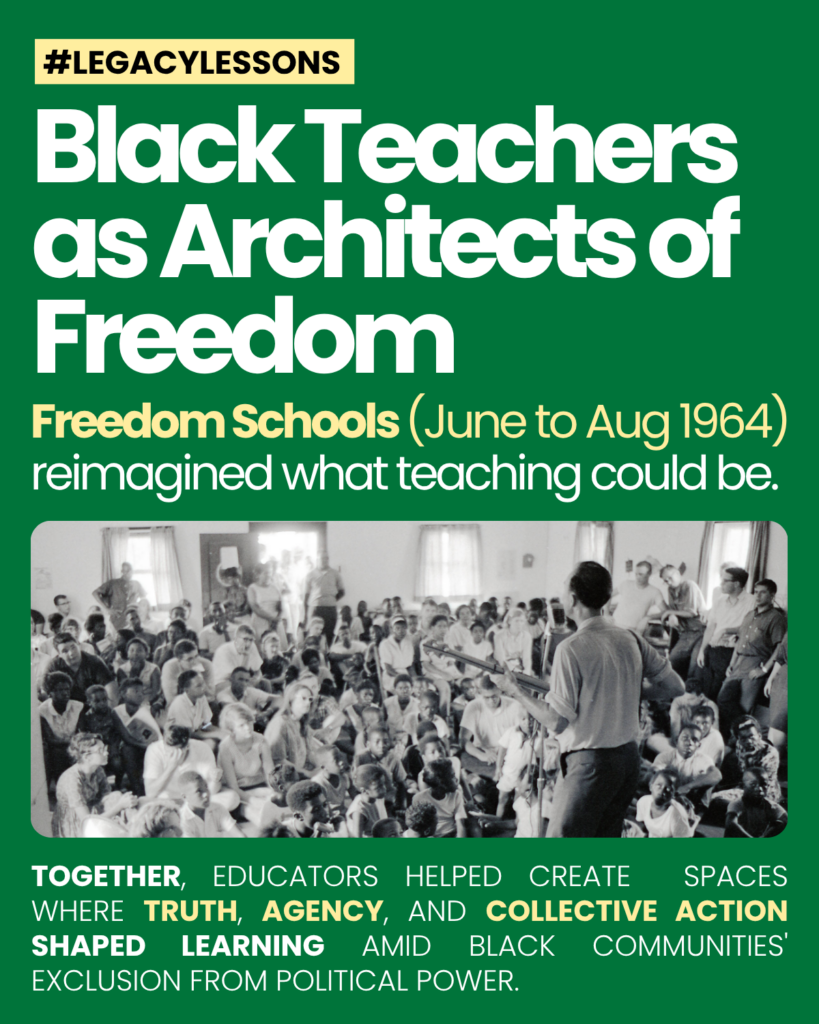
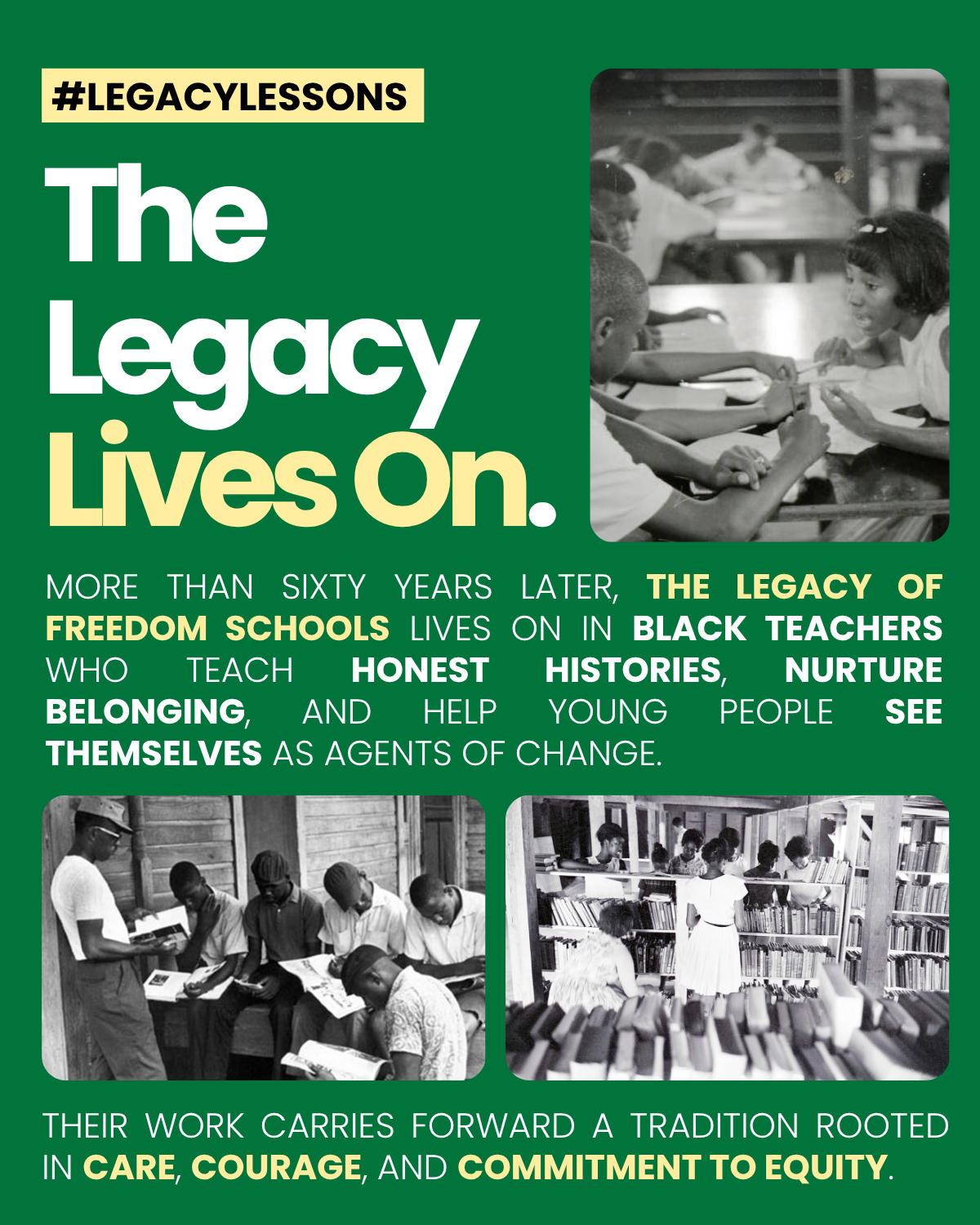
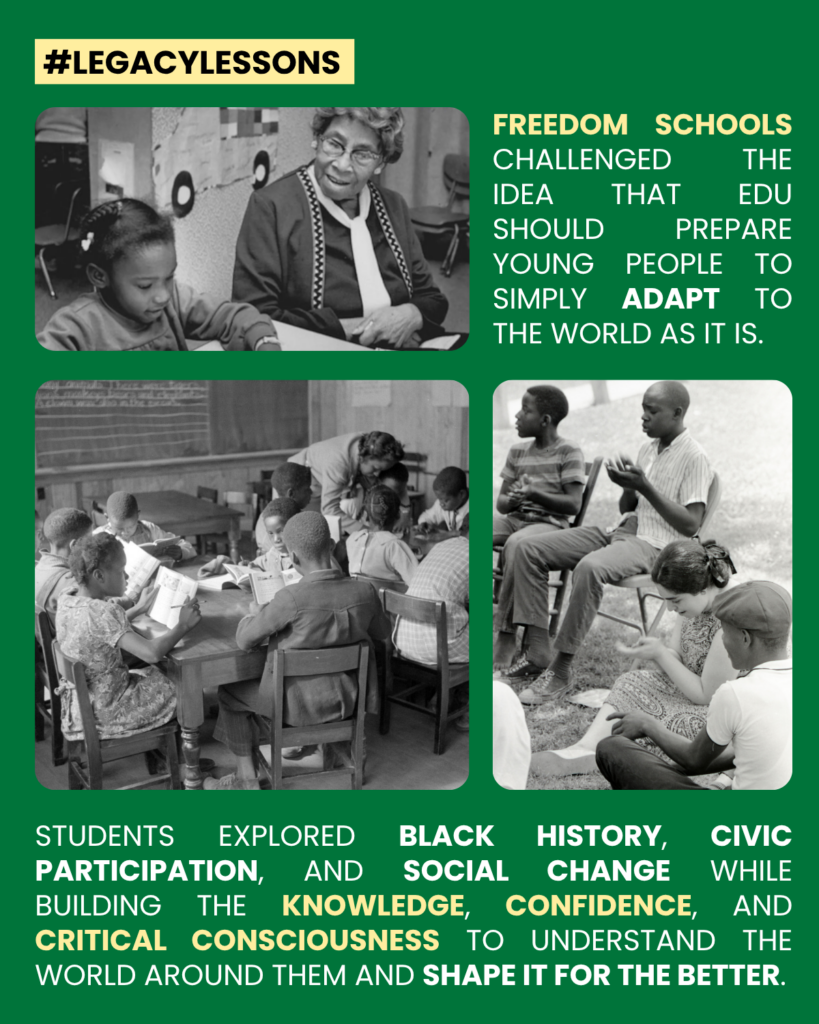
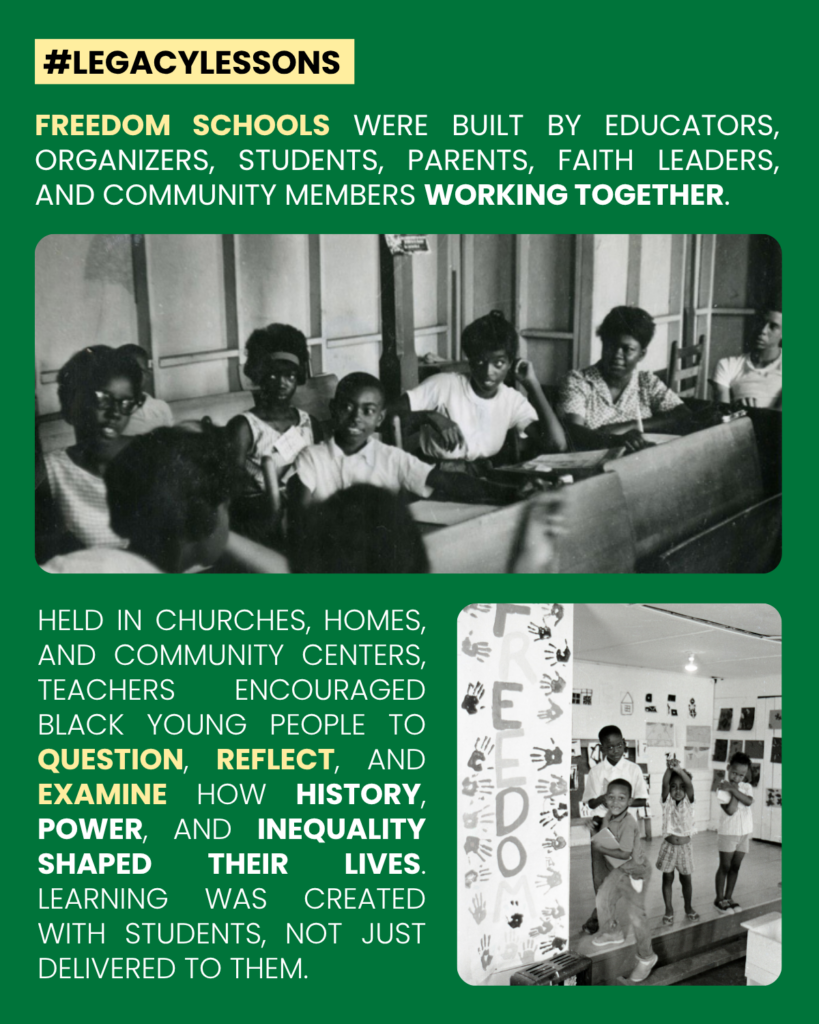
This tradition runs throughout Black history, from the Freedom Schools of Mississippi Freedom Summer in 1964 and the Citizenship Schools of the Civil Rights Movement to mutual aid networks, Historically Black Colleges and Universities (HBCUs), and generations of Black educators who understood that literacy, critical thinking, and collective consciousness are essential tools for liberation.
At its best, education does more than prepare students for the world as it is. It prepares them to participate in creating the world as it could be. In this sense, freedom is not something Black teachers simply teach about. It is something they help students practice.
Literacy Is More Than Reading
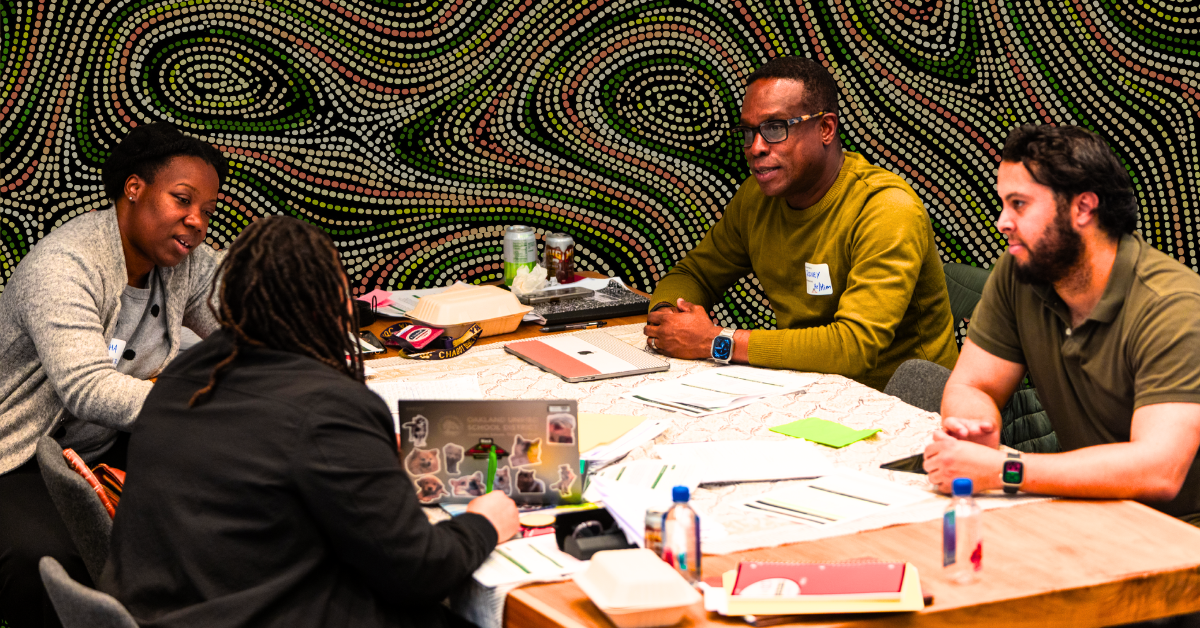
This spring, Black Teacher Project concluded Literacy for Liberation, a six-session learning experience that brought Black teachers together in Oakland, CA to explore the relationship between literacy, critical consciousness, culturally rooted pedagogy, and Black freedom.
The series, facilitated and created by Black educators Spencer Pritchard and Briana Clarke, alongside BTP Board Member Rachelle Rogers-Ard and BTP’s Dr. Micia Mosely, was designed around a simple but powerful understanding that literacy is not merely about reading words on a page. It is about making meaning of the world.
Black teacher participants representing over a dozen schools in seven districts across the Bay Area together explored the historical role literacy has played in Black liberation movements, strengthened culturally rooted instructional practices, deepened their capacity for critical literacy instruction, and built a professional community committed to supporting one another’s growth and leadership. Weekly, they gathered around texts, historical examples, and shared experiences, engaging one another’s perspectives with curiosity and care while exploring how liberated learning can show up in their classrooms, relationships, and instructional practice.
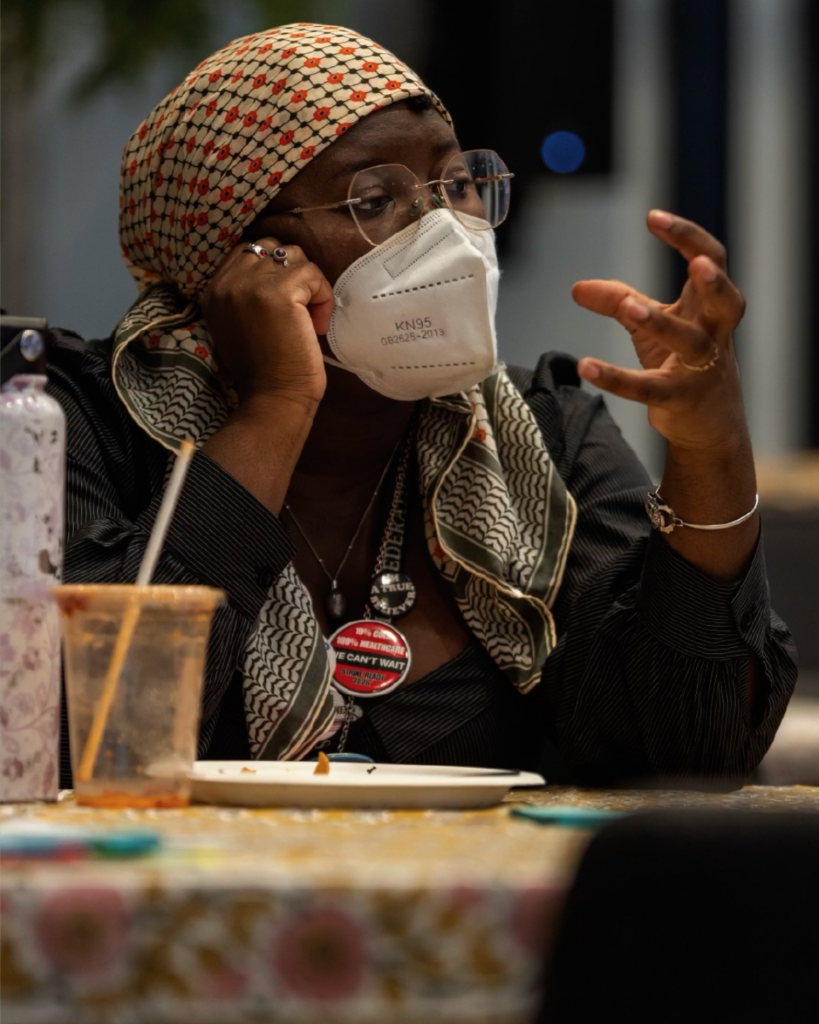
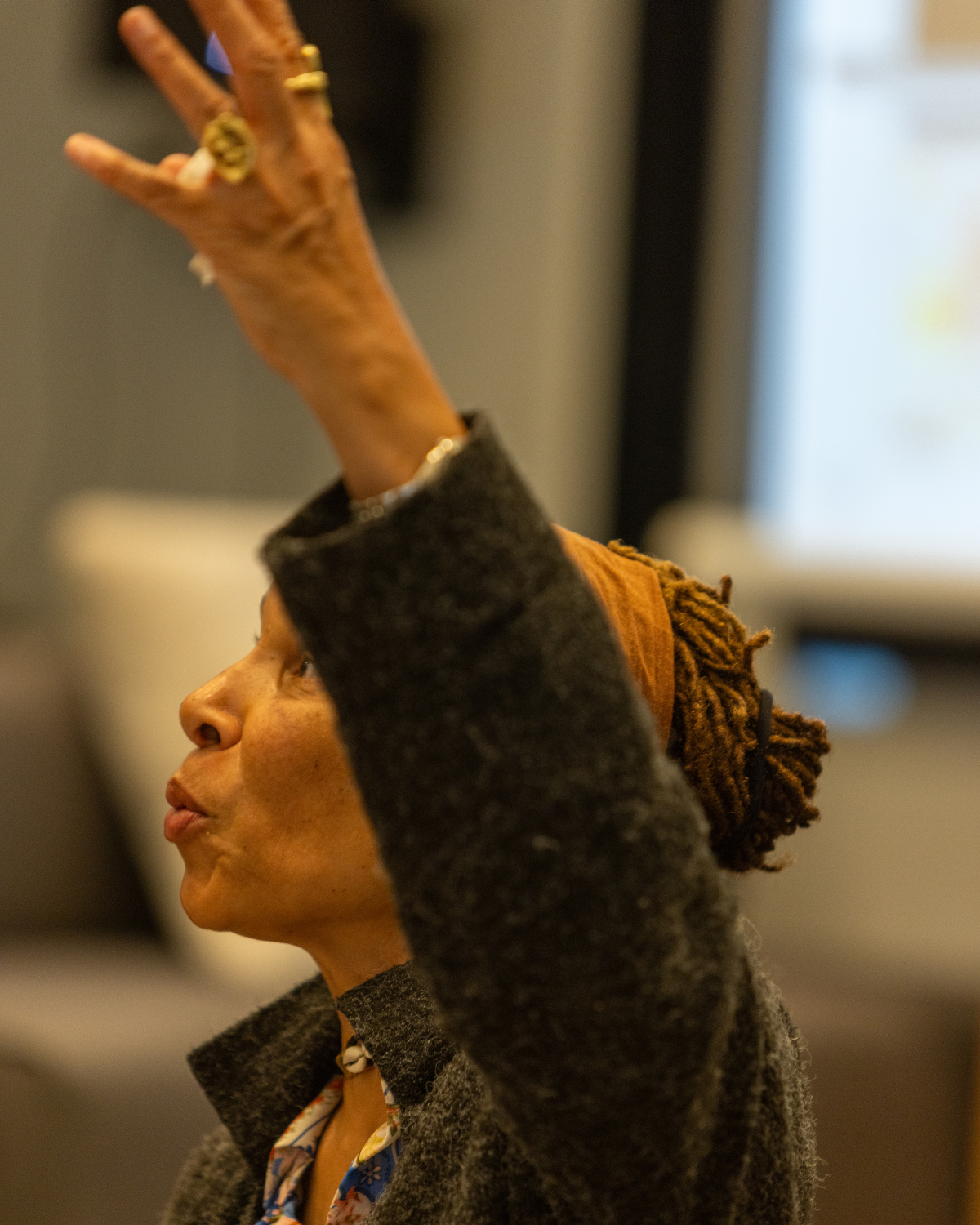
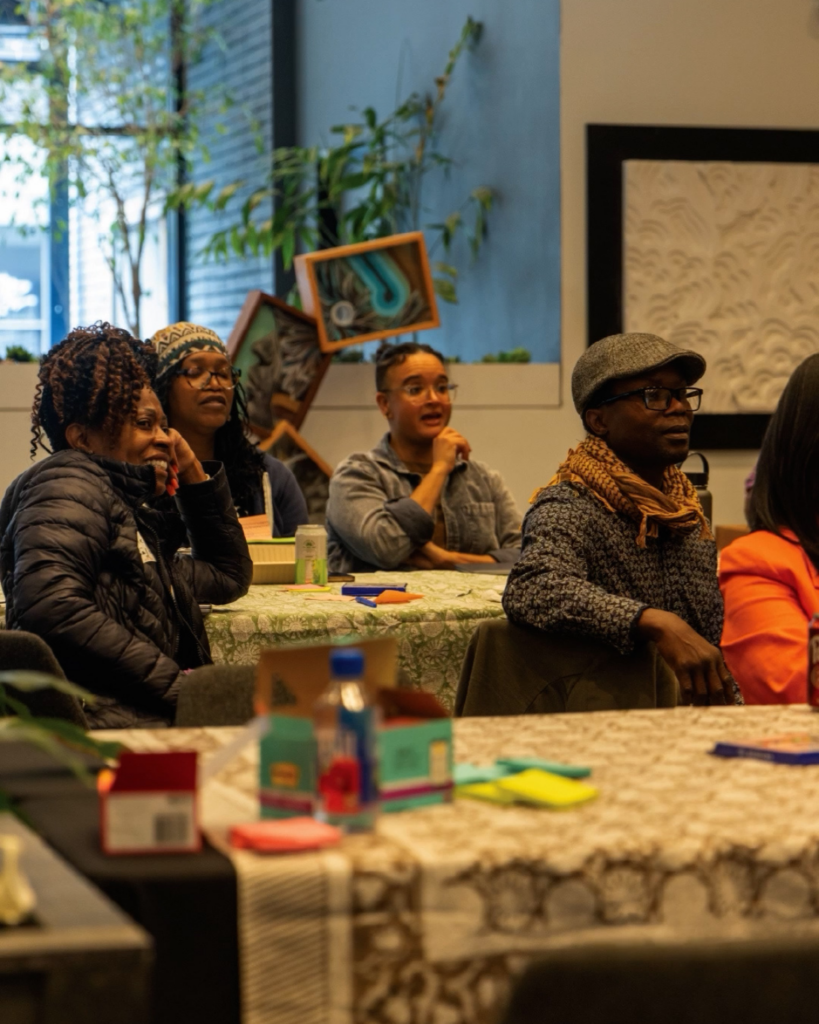
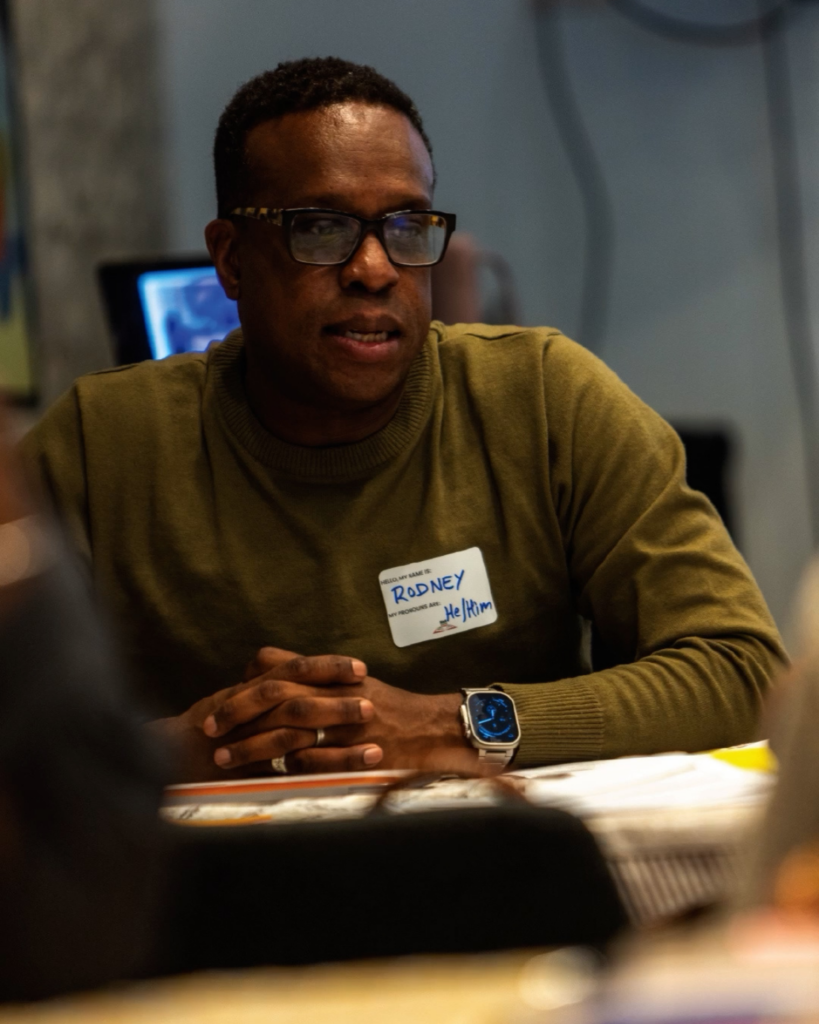
Literacy is power and the premise of the series reflected this truth long understood by Black communities. Throughout history, literacy has often been treated as a threat by those invested in maintaining inequity because literacy creates agency. It allows people to access information, challenge dominant narratives, tell their own stories, and imagine alternatives. “Literacy is liberation,” shares Rachelle Rogers-Ard, who supported the design of the shared learning experience. “It literally is how we are free and remain free.”
As books remain challenged, histories are continuously sanitized, and educational spaces become sites of political contestation, literacy becomes more than an academic skill. It becomes a practice of inquiry, a practice of discernment and a practice of freedom.
“I know my why, and the question that really spoke to me was, what does it mean to think critically about the world?,” shares Patricia Johnson, a Black educator participant in the experience. “[This] reopened those thoughts to me, those visions that I have for my students. It made me think even more critically about my pedagogy and what I’m doing.”
Questions like these sit at the heart of liberated learning. They invite students not only to absorb information but to question it. Not only to study history but to understand how history shapes the present. Not only to acquire skills but to develop agency, voice, and a sense of possibility.
“We are bridging,” shares Dr. Mechelle Newell, another Black educator participant. “And building bridges so that our kids have words too.”
Words matter because they help us name our experiences, stories matter because they help us understand our place in the world, and literacy matters because it helps us shape what comes next.
The Freedom Work of Black Teachers
If literacy is one pathway toward liberation, community is another.
This Spring also marked the graduation of BTP Fellows Cohort 5 in Atlanta, where Black educators spent eighteen months exploring Black identity development, leadership for liberation, wellness, and transformative instructional practice while building the knowledge, relationships, and courage needed to create meaningful change in their schools and communities.
We also celebrated the conclusion of Thriving Black Teachers for Thriving Students: Embodying Wellness Mindsets & Practice, a virtual affinity experience centered on healing and collective wellbeing, grounded in the belief that when Black teachers are supported in their own wellness, they are better positioned to cultivate the relationships, learning environments, and conditions that help all students thrive.
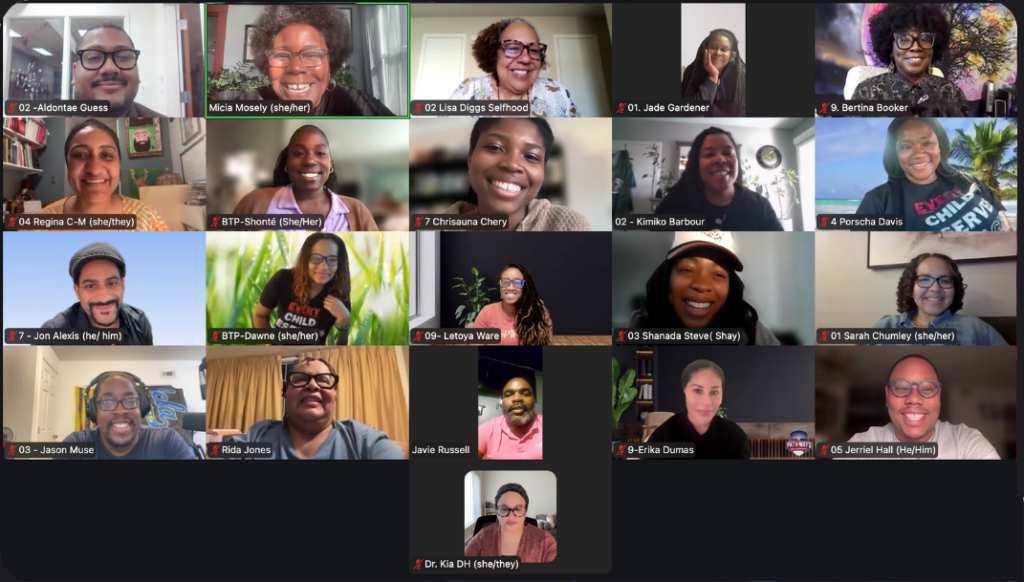
Black educators pose in gallery view during the final session of Thriving Black Teachers for Thriving Students.
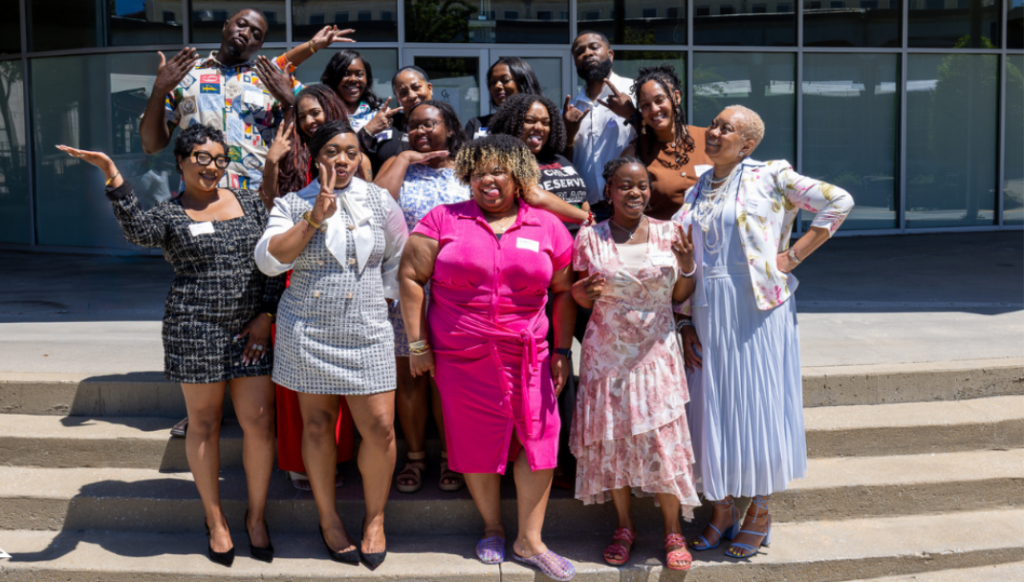
ATL-based Black teachers in BTP Fellowship Cohort 5 gather for a graduation photo at the conclusion of their shared journey.
Like Literacy for Liberation, both experiences were grounded in a belief that shapes all BTP programs, whether in person or virtual: Black teachers deserve spaces where they can learn, reflect, heal, imagine, and grow in community with one another. Spaces where their humanity is centered alongside their practice. Spaces that nurture not only what they do, but who they are becoming. Because when we ask what conditions help Black teachers thrive, the answer is not individual resilience alone. It is community and it is belonging. It is the opportunity to learn, reflect, heal, and grow alongside people who understand both the promise and the pressures of this work.
Throughout the BTP Fellowship, Black educators were invited to reimagine what is possible for themselves, their students, and the systems they inhabit. Through coaching, critical friendship, and collective learning, they explored how leadership rooted in Blackness can cultivate more equitable, affirming, and liberated learning environments. Similarly, Thriving Black Teachers for Thriving Students centered the understanding that adult wellness and student wellbeing are deeply interconnected. In a profession that often demands constant output, the program created space for restoration, reflection, and practices that help educators sustain themselves over time.
These shared learning experiences matter because liberation is not only something we teach; it is something we embody and something we practice together.
“The Black Teacher Project offers a resonant space,” shares Black educator and Literacy for Liberation co-facilitator Briana Clarke. “In this space, we are allowed to say out loud the things that our hearts are screaming and then hear echoed back affirmations from our community. Here, we have an amplified voice as a collective to speak out against the things that are harming us and empower the children that we are teaching.”
That amplification matters. It is part of what makes BTP’s spaces not only sites of professional growth, but places where Black educators can reconnect with themselves and one another. Too often, Black educators are expected to navigate the realities of the profession in isolation. Yet some of the most transformative shifts happen in community, where experiences can be named without explanation, where challenges can be carried collectively, and where new possibilities can be imagined together.
In a moment when so many policies, narratives, and systems seek to narrow possibilities, belonging itself becomes a powerful act of resistance and a reminder that freedom has always been built in community.
We Keep Telling the Story
Juneteenth reminds us that freedom has always required more than declaration. It requires people willing to carry it forward, teach it, protect it, and help the next generation recognize it when they see it and pursue it when they do not.
For generations, Black teachers have done exactly that. They have nurtured critical thinkers, cultivated belonging, expanded possibility, and preserved truths others sought to erase. They have helped students understand themselves not as passive recipients of history, but as participants in shaping what comes next.
At Black Teacher Project, we see that work every day. We see it in Oakland where Black educators gather to deepen their literacy practice. We see it in Atlanta through the leadership of Black teachers now BTP Fellows. We see it in affinity spaces where Black teachers choose restoration over exhaustion, connection over isolation, and community over carrying the work alone. Freedom is not only a historical event. It is an ongoing practice shaped by the stories we tell, the truths we preserve, the communities we nurture, and the possibilities we make available to one another. It is a story we continue telling together, and every day, Black teachers help write the next chapter.
“When Black teachers learn together in community with each other, something powerful happens,” shares Black educator and Literacy for Liberation co-facilitator Spencer Pritchard. “Not just for us, but for every student we walk back into the classroom with.” That is the enduring impact of investing in Black teachers. The learning, healing, leadership, and community cultivated in these spaces extend far beyond any single gathering, cohort, or program. They travel into classrooms, relationships, schools, and communities, shaping the experiences of all young people long after the formal learning and school year ends.
The story continues, the liberation work continues and so does BTP’s commitment to ensuring Black teachers have the community, support, and opportunities they need to thrive. Because freedom is not only something we inherit. It is something we practice, protect, and pass forward.
Join us in creating and sustaining spaces where Black teachers can learn, lead, heal, and continue building communities of liberated learning for generations to come. Become a BTP monthly supporter today.