Before any child learns to read, solve an equation, or write words, they learn something even more foundational. They learn whether the learning space they’re in, be it a classroom or a community, is a place where they belong. They discover whether their questions are welcomed, their joy is protected, their culture is reflected, and whether the adults around them see them not simply as young students, but as human beings worthy of care.
That understanding shapes everything that follows. It influences whether young people feel safe enough to take risks, curious enough to inquire, and confident enough to become themselves through learning.
As we enter a new chapter as an independent organization after ten years of partnership with the National Equity Project (NEP), our mission at the Black Teacher Project (BTP) remains clear and unchanged. We will continue, as we always have, to support and sustain Black teachers as they lead and reimagine schools as communities of liberated learning where every child can thrive. This next chapter allows us to carry forward what has always been true of our work. Rooted in the same values that have shaped BTP from the beginning, we move ahead with renewed clarity and a bolder voice, continuing to learn alongside Black educators and advancing a vision of education rooted in liberation, belonging, and the enduring belief that every child deserves a Black teacher.
For a decade now, Every Child Deserves a Black Teacher has guided our work. As we’ve continued to learn alongside Black educators, that belief has deepened our understanding of what makes Black teachers’ presence and practice so transformative. Every year, as another school year comes to a close, we see it reflected in the end-of-year TikToks, graduation speeches, handwritten notes, and stories shared by students, families, and school communities about the Black teachers who changed their lives. Again and again, those stories return us to the same lesson: care is a pedagogy.
Running through those stories is the shared truth that care is not simply kindness, empathy, or good intentions. It is a way of teaching rooted in the understanding that learning is deeply relational and that the conditions in which students learn matter just as much as the lessons they receive. In communities of inquiry, moments of reflective practice, and the spaces we intentionally create for Black teachers to gather, that same truth is affirmed again and again. So, too, is the truth that Black educators cannot sustainably cultivate belonging, curiosity, courage, and joy in young people, or have the transformative impact they are so often called upon to have, without first experiencing those same conditions themselves.
Black teachers have always known this. Long before today’s conversations about social and emotional learning, healing-centered practice, or educator wellness, Black teachers understood that caring for the whole child is inseparable from caring for the whole teacher, and that liberation begins by caring for the whole person. Our work at the Black Teacher Project has never been about creating something new. It has been about Sankofa, returning to the brilliance and wisdom of our elders’ and ancestors’ educational traditions to honor, strengthen, and carry forward a legacy of collective care that has always been foundational to Black teaching and continues to shape our pedagogy.
Care Creates the Conditions for Learning
To us and for many Black educators, care is not something that happens before instruction begins or after students leave the classroom. It is the way teaching is imagined, designed, and experienced, shaping how relationships are built, how classrooms are led, how conflict is navigated, how identity is affirmed, and how possibility is cultivated.
That understanding informs everything we do at the Black Teacher Project. Whether supporting Black educators in strengthening Black identity development, deepening wellness practices, expanding culturally sustaining instruction rooted in Blackness, or growing as leaders for liberation, our work begins from the same premise: thriving educators create thriving learning communities. These are not separate priorities, and together, they create the conditions where liberated learning can take root.
Our commitment to care is reflected in the Healing Framework, which has guided our programs alongside more than 3,000 Black educators and more than 300 school leaders. Developed as an iteration of the National Equity Project’s Leading for Equity Framework, the Healing Framework was created in partnership with Black Teacher Project and NEP team members Asali Waters, Ana Moreno, Asha Sitaram, Juan Alegría, Solāris Noire, and Zach Serrano. It invites educators to move beyond simply becoming more resilient within systems that too often fail to care for them.
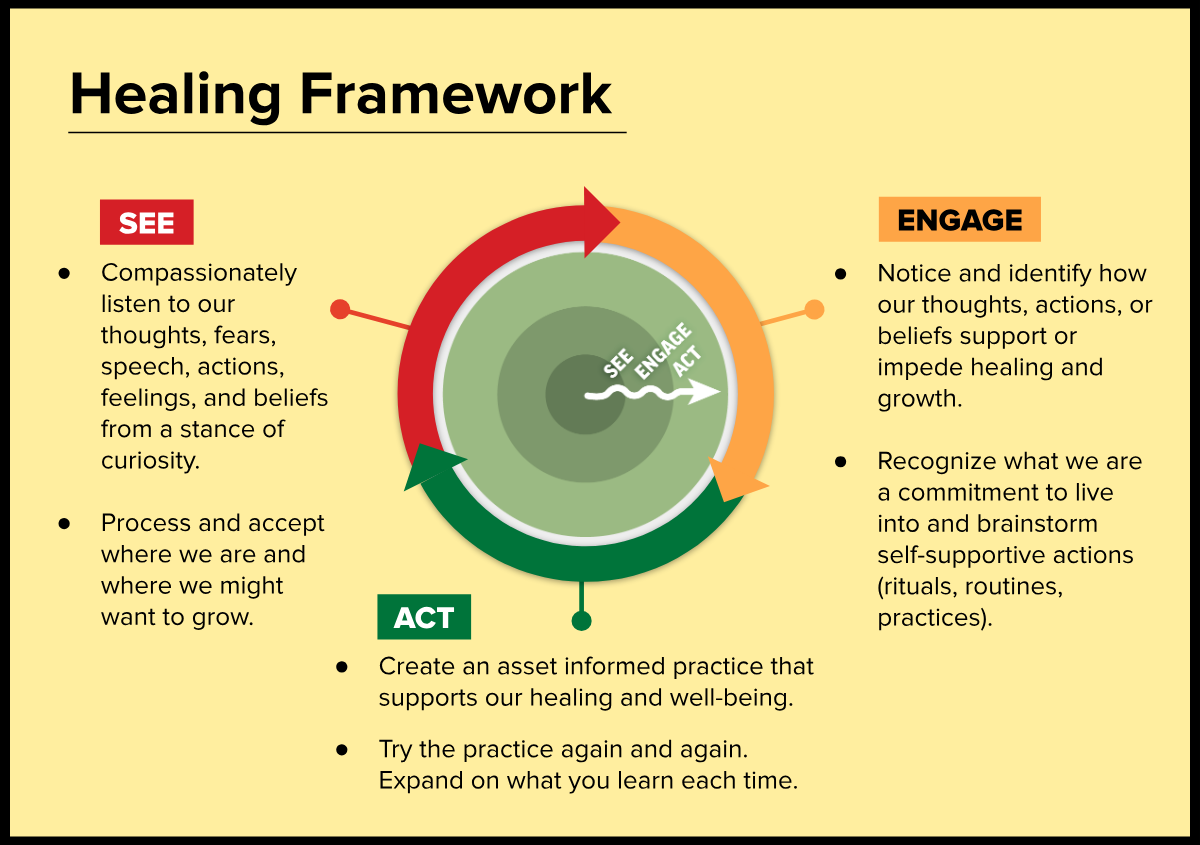
Through the practice of see-engage-act, educators are invited to see themselves and their communities with curiosity, engage intentionally in healing and reflection, and act in ways that cultivate sustained wellbeing.
That same dedication to care also grounds our embrace and forever advocacy of Liberatory Design, which invites educators to notice, listen, empathize, imagine, and design with students rather than for them.

Both frameworks remind us that meaningful transformation begins with relationship, reflection, and trust in the wisdom already present within communities.
The philosophy of collective care did not begin with us. Throughout history, Black educators, parents, organizers, and communities have refused the false choice between meeting children’s immediate needs and cultivating their intellectual growth. From Fannie Lou Hamer’s Freedom Farm Cooperative to the Black Panther Party’s Survival Programs, Black communities have long understood that care was never separate from education. It made education possible.
At the Black Teacher Project, we understand that legacy through Sankofa and return to the wisdom and brilliance of our elders and ancestors not out of nostalgia, but because their legacy continues to illuminate what liberated learning asks of us today. Care is not a new educational idea. It is an enduring Black educational tradition that continues to shape how we teach, learn, and lead.
When Black Teachers Thrive
If care is a pedagogy, then we must also ask who is caring for the people who carry it.
For generations, Black teachers have transformed the lives of students while navigating extraordinary demands of their own. Research continues to affirm what Black communities have long known. Black teachers strengthen academic achievement, deepen students’ sense of belonging, reduce exclusionary discipline, and expand what young people believe is possible for themselves. Their impact extends beyond Black children alone. Every student benefits from learning with educators who bring cultural wisdom, high expectations, and a vision of thriving rooted in liberation.
Yet Black educators are also more likely to experience isolation, racialized stress, disproportionate leadership responsibilities, and the emotional labor of helping schools confront inequities they did not create. In too many schools, the educators asked to sustain children are not themselves being sustained.
Teacher wellbeing, then, is not separate from student wellbeing. It is one of its foundations.
That truth echoed throughout our recent conversation with educator and LiberatED founder Dr. Dena Simmons on the latest episode of the Black Teacher Project Podcast. Reflecting on her years in the classroom, she reminds us that trusting relationships are the foundation of meaningful learning and that classrooms become liberating when educators intentionally create the conditions for students to feel free, to heal, and to become themselves. Her words reinforce what Black teachers have always understood about care. It is not the opposite of rigor but what makes rigorous, joyful, and lasting learning possible.
That conviction shapes every part of our work. Whether through Thriving Black Teachers for Thriving Students, the Black Teacher Design Lab, our annual Black Teacher Wellness Grants, the Black Teacher Project Podcast, or our partnerships with schools and districts, we create spaces where Black educators can reconnect with themselves, one another, and the practices that sustain them. Every offering is rooted in our fierce belief that when Black teachers have the opportunity to heal, imagine, lead, and thrive, students, schools, and communities thrive alongside them.
As BTP begins this next chapter as an independent organization, our commitment remains the same. We will continue learning alongside Black educators and helping ensure they have the community, resources, and support to keep leading classrooms where every child can experience liberated learning.
Before children remember the lessons they were taught, they remember how it felt to learn. Whether they belonged, whether they were seen and whether someone believed they were worthy of care.
Black teachers have been shaping those memories for generations. Their care has transformed classrooms, sustained communities, nourished movements, and carried generations of learners toward liberation. It has never been separate from education. It has always been a pedagogy.
If you believe every child deserves a Black teacher, we invite you to invest in the teachers who make that future possible. Become a monthly donor today and invest in our growing movement to develop, sustain, and celebrate Black teachers whose care continues to shape liberated learning, one classroom and one community at a time.