

Students know when a classroom feels like a place where they belong. They know when they are being listened to, when they are simply being managed, what helps them settle into learning, what makes them withdraw, what brings them joy, and what makes it easier to take a risk, ask for help, or try again.
Black teachers carry knowledge too. They bring their lived experiences, cultural wisdom, relationships with students, observations of school systems, and an understanding of what becomes possible when young people are seen in the fullness of who they are.
Liberated learning asks us to take that knowledge seriously. It asks educators to resist the assumption that the person with the most institutional authority must also have every answer. It also asks us to listen before deciding, to create with rather than for, and to understand student voice as more than an invitation to offer an opinion. Voice becomes agency when what students say has the power to shape what happens next.
This is the work at the heart of our Black Teacher Design Lab, a seasonal program for Black educators that has run at the Black Teacher Project for eight consecutive cohorts. Working in teams alongside their students, Black teachers who participate identify challenges rooted in real classroom experiences and co-design healing-centered responses that strengthen voice, wellness, belonging, and learning power in their shared spaces.
Listening Is Part of the Design
Listening to students is more than gathering feedback. It can challenge what an educator thinks they know about a problem, surface needs they may not have recognized, and change the response that follows.
That kind of listening is built into the Black Teacher Design Lab through the Liberatory Design Approach and the National Equity Project’s Leading for Equity Framework. The SEE, ENGAGE, and ACT process guides the Lab’s participants to look closely at an equity challenge, engage the people most affected by it, and take action based on what they learn. The process makes listening consequential because what students share is expected to inform what gets imagined, tested, and changed.
The distinction between designing for and with matters. In the latest episode of the Black Teacher Project Podcast, four past Design Lab participants reflect on what changed when students were invited into that process. “It’s us working together as a team in order for us to succeed,” shares Jahvan Russell, who participated alongside fellow Black man and math educator Paul Jackson. Describing a classroom where students understand that learning is not a dictatorship, he adds, “I tell them over and over, it has to be 50/50 from you and from me.”
That belief became tangible as Russell and Jackson worked with students to address math anxiety. Rather than arriving with a predetermined solution, they listened to how students experienced math and what could make learning feel more relevant, supportive, and connected to their lives. Their experiences helped define the challenge, and their perspectives helped shape what came next.
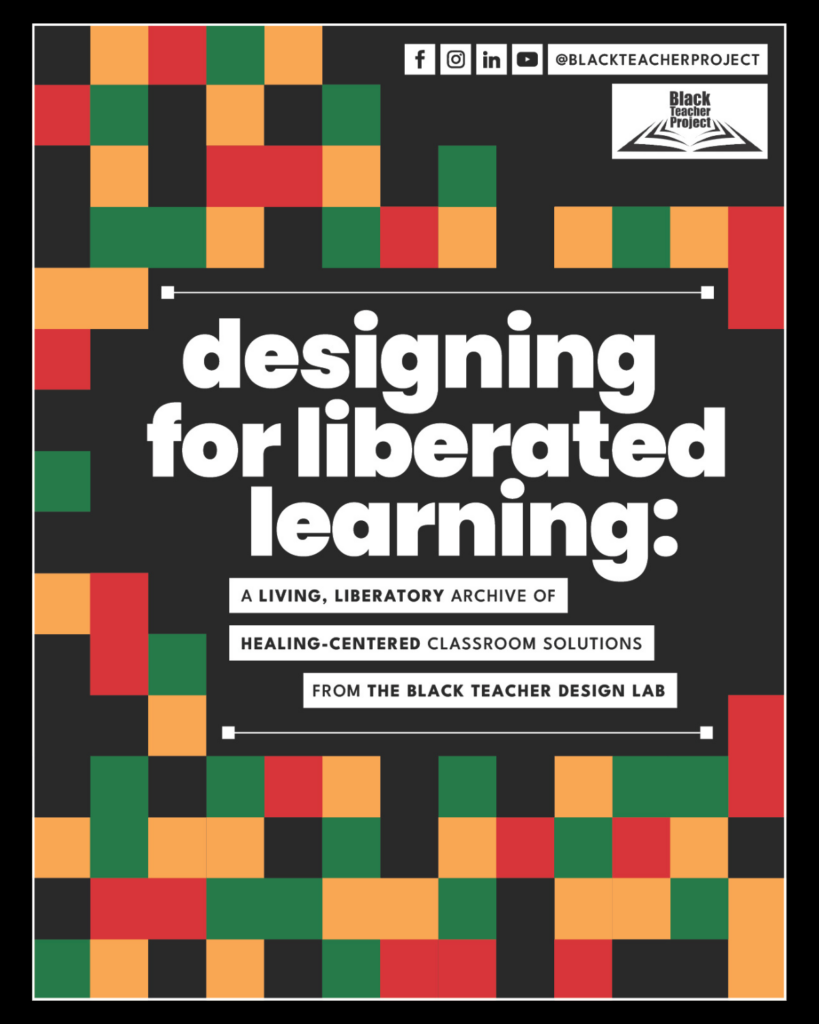
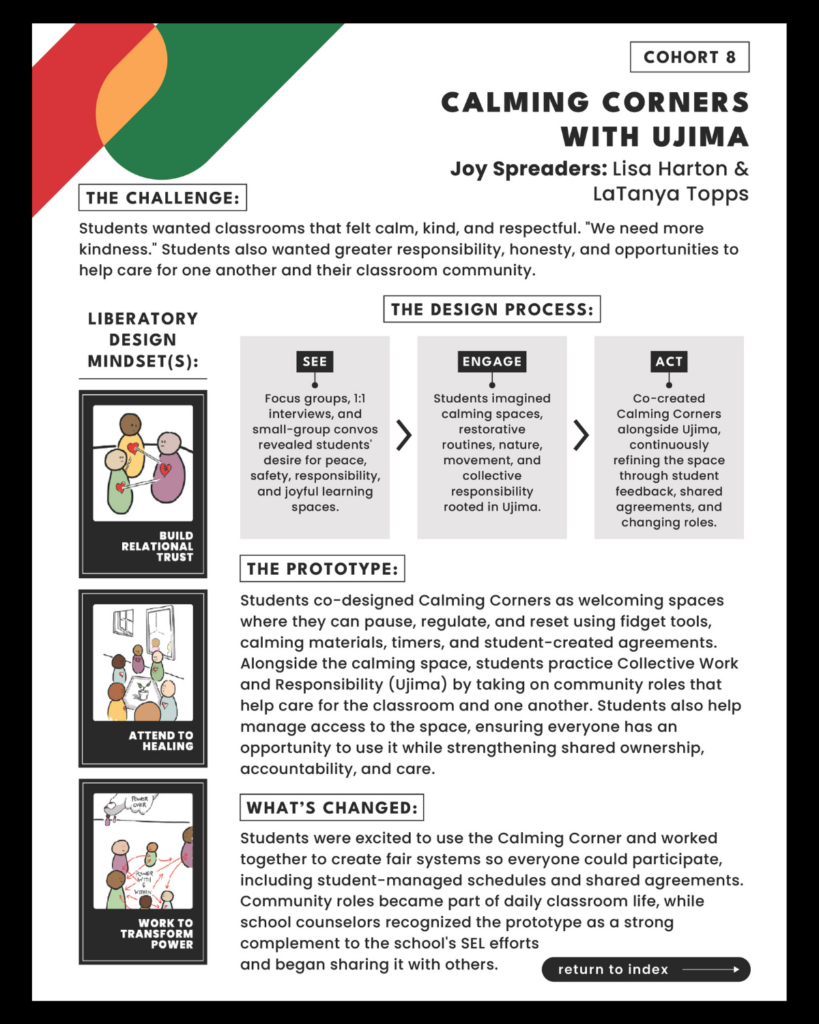
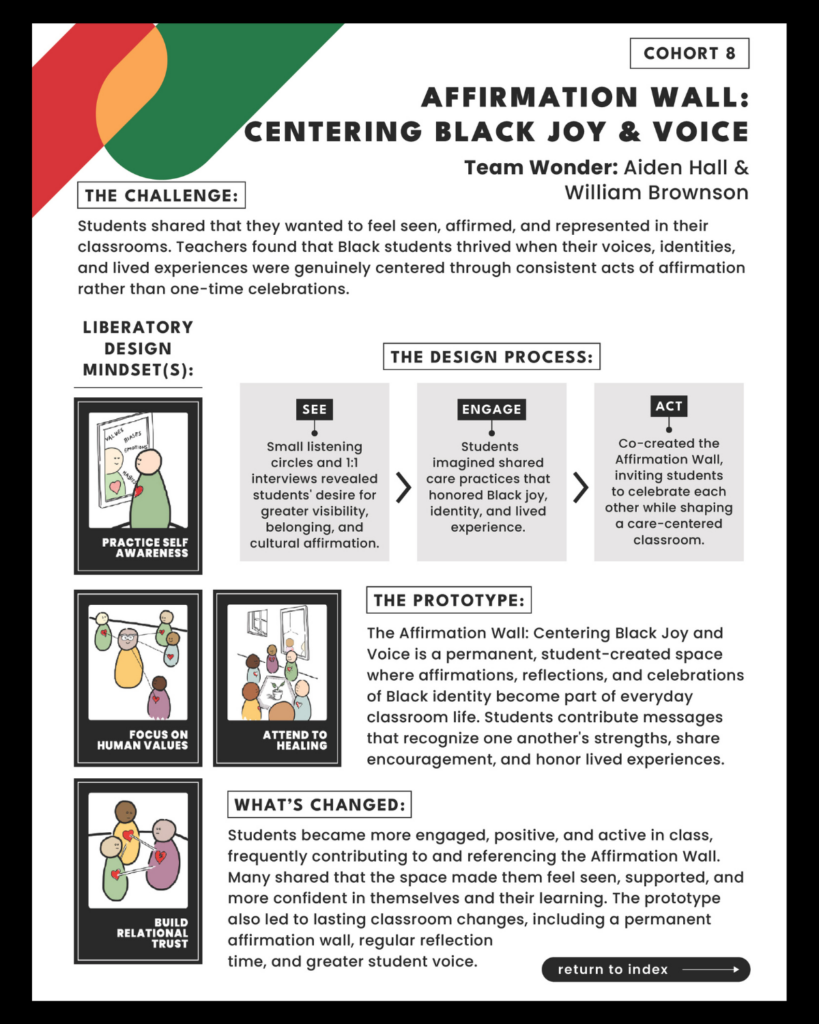
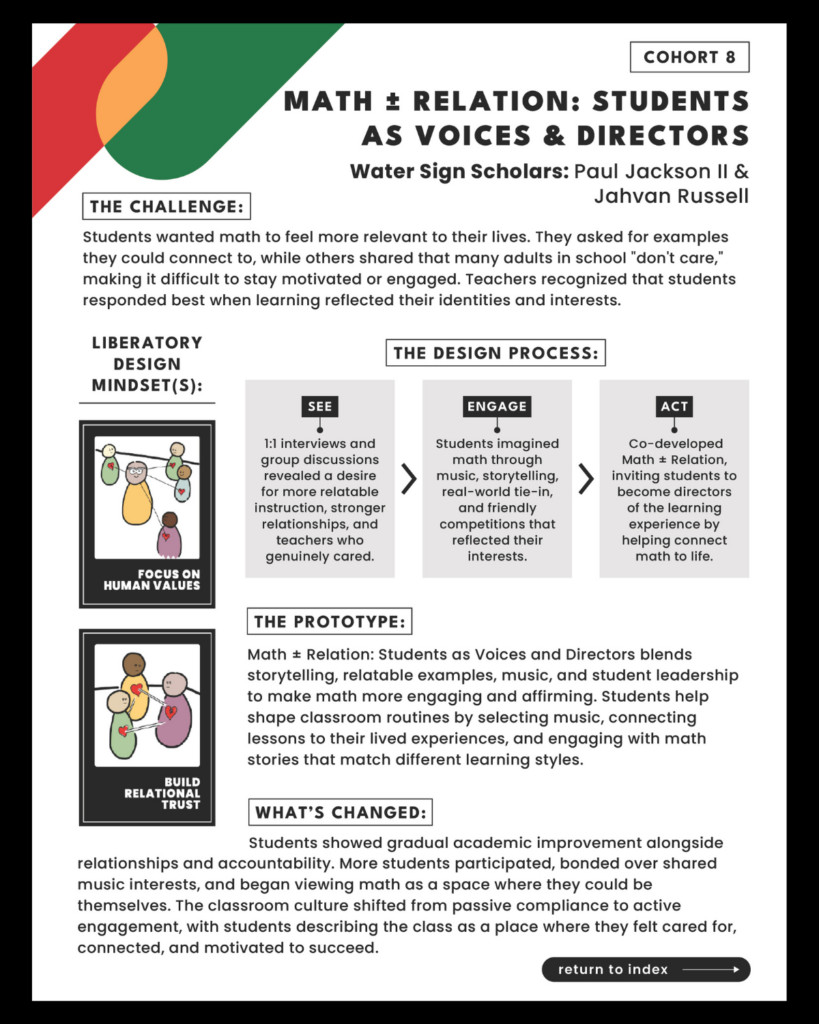
Across eight cohorts, that shift has taken many forms, documented in Designing for Liberated Learning, a living collection of classroom prototypes co-designed by Black teachers and their students. Student voices have shaped spaces for rest and emotional regulation, including what belongs in those spaces and how they should be used, as well as community conversations that offer different ways to participate and communicate. Their ideas have also made room for pausing, making mistakes, asking for help, and trying again, while bringing storytelling, mentorship, music, cultural affirmation, movement, joy, and honest conversation more intentionally into classroom life.
And the responses look different because liberation is not a template. What connects them is a shift in whose knowledge can define the need and shape the response.
Agency Changes What Gets Built
Listening matters, but listening alone does not redistribute power. Student voice becomes more consequential when students can see evidence that what they shared changed something.
Across the Black Teacher Design Lab’s classrooms, students have helped set norms, choose activities, lead conversations, shape restorative practices, and offer feedback that changes a design. Sometimes that feedback has redirected an idea altogether. In one classroom, students made clear that connection with one another was more useful than some of the journaling and meditation practices initially being tested, leading their teachers to place greater emphasis on authentic conversation and peer connection. In another, students uncomfortable raising their hands helped create multiple ways to participate, including writing and the choice to pass. Over time, students became more willing to ask questions and advocate for themselves, eventually extending that agency through the formation of a student council.
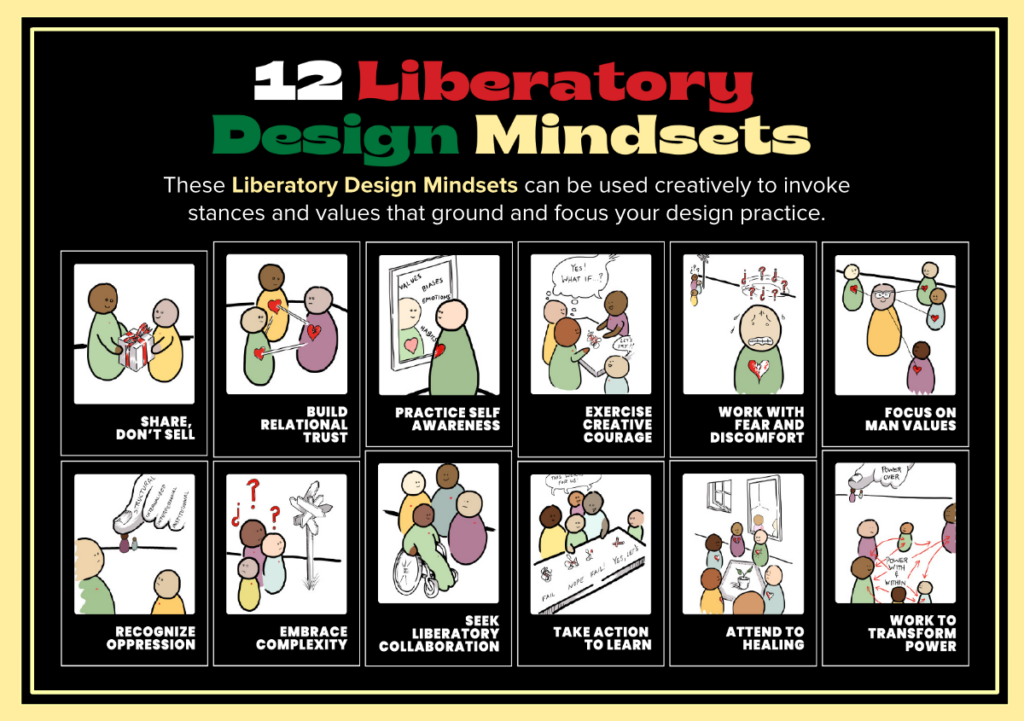
The Design Lab centers the Leading for Equity Framework © by the National Equity Project and the Liberatory Design Approach which includes modes and mindsets that both ground and guide practice. Liberatory Design (http://www.liberatorydesign.com) is the result of a collaboration between Tania Anaissie, David Clifford, Susie Wise, the National Equity Project [Victor Cary and Tom Malarkey].
This is part of what it means to work to transform power, one of the mindsets within Liberatory Design. Educators still teach, guide, and care for students, but students’ knowledge has a real pathway into the decisions shaping their learning environment. Agency grows when voice has somewhere to go.
Care Is Part of Liberation
What students choose to do with that agency also tells their teachers something. Across the Black Teacher Design Lab’s classrooms, grade levels, and communities, young people have repeatedly asked for opportunities to pause and regulate, experience more joy and affirmation, build meaningful relationships, connect with their cultures, turn to trusted adults, speak honestly, and feel heard without judgment.
Black teachers and their students have responded by building care into the rhythms of learning through emotional check-ins, storytelling and mentorship, music and movement, rest, student leadership, and shared responsibility for classroom community. In some cases, students have helped design spaces where they can reset while collectively determining how those spaces should be used and cared for. Elsewhere, student ideas about joy and affirmation have grown beyond individual classroom practices into structures for elevating student voice across a school.
These are not departures from learning but part of the conditions that make learning possible. Belonging, emotional safety, joy, cultural affirmation, relationships, and agency shape how young people experience a classroom and whether they can fully participate within it.
Black Teachers Need Each Other Too
Care does not stop with the students. The Black Teacher Design Lab also creates space for Black educators to experience the kind of community and support they are working to cultivate with young people.
In the latest episode of the BTP Podcast Episode 8, Albertina Carrillo, reflecting on realizing how much she needed that community shares, “I didn’t know that I needed to be around other Black educators. Like, okay, I’m not the only one feeling this way. And I didn’t know I needed that until I needed it.”
Christine Daniels, her teammate in the Black Teacher Design Lab, describes breakout spaces as “sacred” time where Black teachers could talk honestly about difficult days, students, families, work-life balance, and the realities they were carrying. Across cohorts, participants have similarly described the power of seeing “so many faces like mine in a judgement free zone established for healing and collaboration” and leaving with “a renewed sense of self and a deeper conviction to educate for liberation.”
This also belongs in conversation about liberation. Liberatory Design calls practitioners to build relational trust, attend to healing, practice self-awareness, recognize oppression, collaborate, and work to transform power. In the Design Lab, those commitments shape not only how Black teachers work alongside students, but how Black teachers show up for one another.
What We Practice Toward
Across eight cohorts of the Black Teacher Design Lab, the designs have been different, but remarkably consistent throughlines have emerged around voice, belonging, joy, cultural affirmation, emotional safety, meaningful relationships, opportunities to rest and regulate, and the ability to help shape the places where learning happens.
Liberated learning can look like young people determining the agreements for a space designed to help them reset, deciding how they want to participate in a conversation, shaping learning around their lives, or telling an educator that the solution they imagined is not actually what students need. It can also look like Black teachers sitting in community with other Black teachers and hearing, perhaps for the first time in a long time, “I feel that way too.”
None of these practices alone dismantles the systems that constrain Black teachers and students but they offer ways to practice different relationships to voice, power, agency, learning, and care while working toward the deeper transformations liberation demands.
**Applications for the Fall 2026 Black Teacher Design Lab are open through Monday, September 28. Black teachers interested in joining the next cohort, learn more about the opportunity and apply with a teammate! bit.ly/btp-design-lab